Jinsha Ruins
Overview
The Jinsha Ruins, located in the city of Chengdu, Southwest China's Sichuan province, are one of the most significant archaeological discoveries in the region, dating back 3,200 to 2,600 years. Discovered in 2001, the site has yielded over 10,000 relics, including items made of gold, jade, bronze and ivory, as well as large amounts of pottery and ceramic shards. The Jinsha Ruins are considered a crucial cultural site, providing insight into the ancient Shu civilization.
Historical Significance
The Jinsha Ruins are believed to have been a political and cultural hub of the ancient Shu Kingdom, a successor to the Sanxingdui culture. After a catastrophic event, such as a flood, the inhabitants of Sanxingdui are thought to have migrated to the area now known as Jinsha, where they continued their cultural and societal practices. This site is often associated with the transition of the Shu Kingdom from Sanxingdui to Jinsha, indicating a shift in political centers.
The discovery of the Jinsha Ruins has significantly contributed to the understanding of the diversity and complexity of early Chinese civilization. It challenges the notion that the Yellow River was the sole cradle of Chinese culture, highlighting the rich and varied origins of Chinese civilization in the Yangtze River region. The Jinsha Ruins have also played a crucial role in Chengdu's cultural tourism, attracting millions of visitors and helping to establish the city as a world-renowned cultural and historical destination.
Discovery and Excavation
The Jinsha Ruins were discovered accidentally in February 2001 when construction workers unearthed a cache of ivory and jade pieces while working on an apartment building in Jinsha village, Chengdu. The surprising find led to large-scale archaeological excavations, revealing approximately 5 square kilometers of historically significant area. These excavations continue to provide evidence of the advanced and rich culture of the ancient Shu people, showcasing their artistry, societal structure and beliefs.
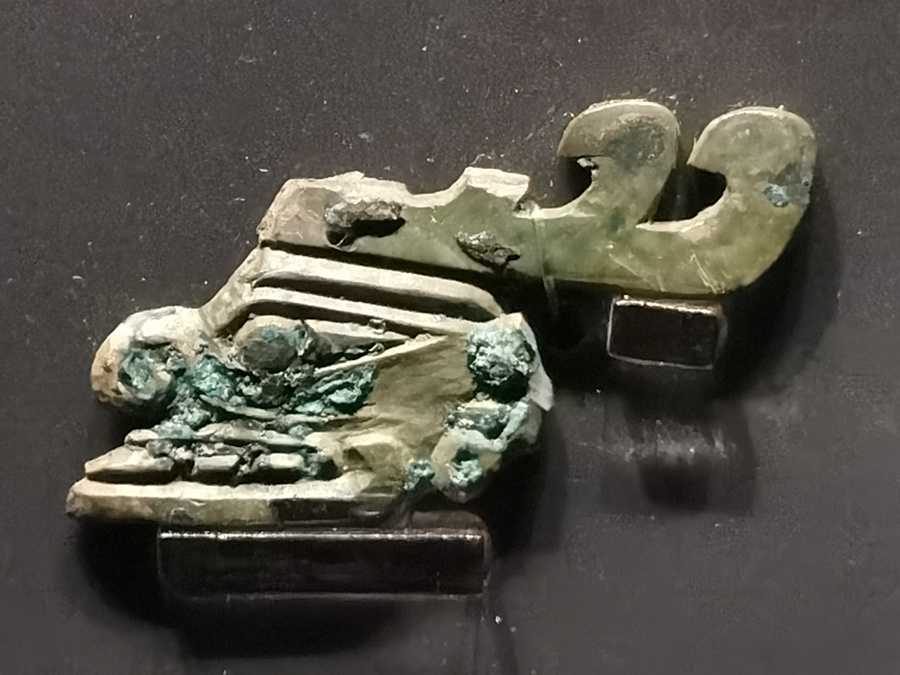
The artifacts unearthed at Jinsha include a variety of gold, jade, bronze and stone items. Among the most notable finds is the gold-leaf sunbird, an emblem that has become a symbol of Chinese cultural heritage. This artifact, along with others, is prominently displayed in the Jinsha Site Museum, which opened in 2007. The museum not only exhibits these precious relics but also hosts temporary exhibitions, such as the Syrian cultural relic exhibition, broadening cultural exchange and understanding.
Relationship with Sanxingdui
The Jinsha Ruins share a close connection with the Sanxingdui Ruins, another major archaeological site located in Guanghan, Sichuan. The similarities in artifacts, including types, shapes and processing techniques, suggest a continuity of culture and governance between the two sites. Artifacts such as bronze figures and ceremonial items from both locations exhibit similar stylistic elements, indicating a possible lineage of rulers and cultural practices between Sanxingdui and Jinsha.
Museum and Public Engagement
The Jinsha Site Museum acts as a guardian of the relics, ensuring their preservation and accessibility to the public. It is not only a center for archaeological and historical research but also serves as an educational platform, offering visitors a glimpse into ancient Chinese life and its development over the millennia. The museum's exhibitions are designed to engage and inform, providing a comprehensive overview of the artifacts and their historical context.
Continued archaeological work is expected to uncover even more about the ancient Shu civilization, potentially revising historical understandings of early Chinese culture and civilization. The Jinsha Ruins represent an invaluable part of China's cultural heritage, reflecting the ingenuity, artistry and resilience of an ancient civilization. Article reference1. Exhibition displays key bronzeware discoveries. chinadaily.com.cn. 20232. Origins of our journey. chinadaily.com.cn. 2022Photo Gallery(6 pictures)CategoriesCultural HeritageTagArchaeological DiscoveryArchaeological ParkCatalogue1. Overview2. Historical Significance3. Discovery and Excavation4. Relationship with Sanxingdui5. Museum and Public Engagement- - - []








